


Installation checklist
Take up all the water – adjust the trough
You attach the heating cable thermostat here
Water freezes – heated submersible needed
The trough should be able to move freely

Tighten the trough adapter

Cut the hose at the end of the cable
Description of controls
Place the tray, so all water is collected
Start by laying the tray edge-to-edge with the rear left corner of the outdoor unit. Fill a watering can and pour a few liters onto the silver heat exchanger along the back and left side. Did all the water get into the trough? – Yep! (Good job!) – Almost all of it, move the tray so it covers even the hole, where it ran outside – then you pour a few liters in the same way again. Continue, until all the water is collected.
Electrical connection, control
Check that the trough and the drain kit heating cable are energized. Check the operation of the circuit breaker, earth leakage switch and external power socket.
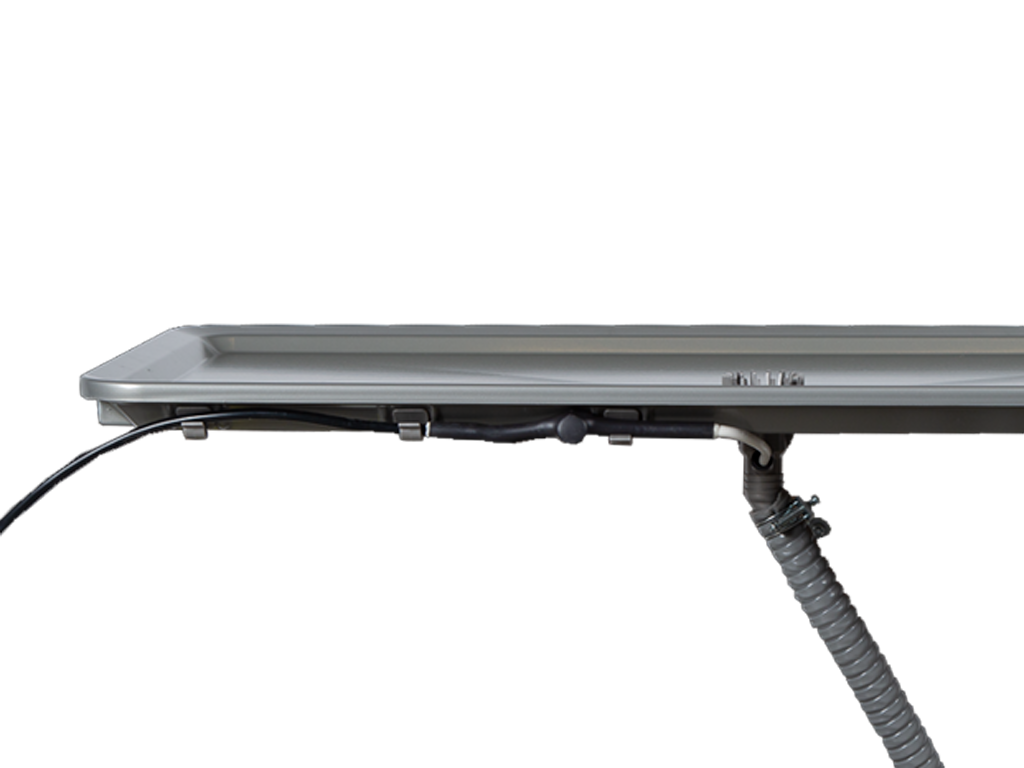
Fixing of the heating cable and the electric cable of the trough.
The drain kit heating cable has a thermostat (the bump between the white and black cable), it should be attached to the back of the tray with the bump facing outwards. The tray thermostats must NOT be tied on or near refrigerant pipes (the black or white thick ones that go to the indoor part), thermostats will be affected and the tray will not work properly.
How do I divert water from the trough?
The easiest way is to use our heated drainage kits, they are available from 1-15m length and designed to withstand down to -34°. The hose used is insulated and has a thermostatically controlled low power heating cable.
Be careful to route the hose without too many bends that can create a water trap.
If the drain hose is horizontal at the end, make sure that the heating cable is slightly longer than the drain hose so that an ice plug cannot form at the end of the hose.
I am only going to divert the water 1m - do I need heating cable in the pipe?
Yes, your drainage trough needs a heated drainage kit, even at short distances. As you know, it can snow even when it is a few degrees above zero outside, and the fan on the outdoor unit produces a cold snap, so the water freezes at a few degrees below zero a few inches below the trough.
I am going to drain the condensate to a downpipe - do I need heating cable in the downpipe?
Houses in urban environments often have downpipes connected to the stormwater, so some heat comes from there. If the stormwater goes to a stone coffin, you need support heating to frost-free depth. In general, we recommend that at least 60cm of heating cable is inserted into the ground pipe in Götaland, in Svealand 100cm and Norrland 150cm (counted from ground level).
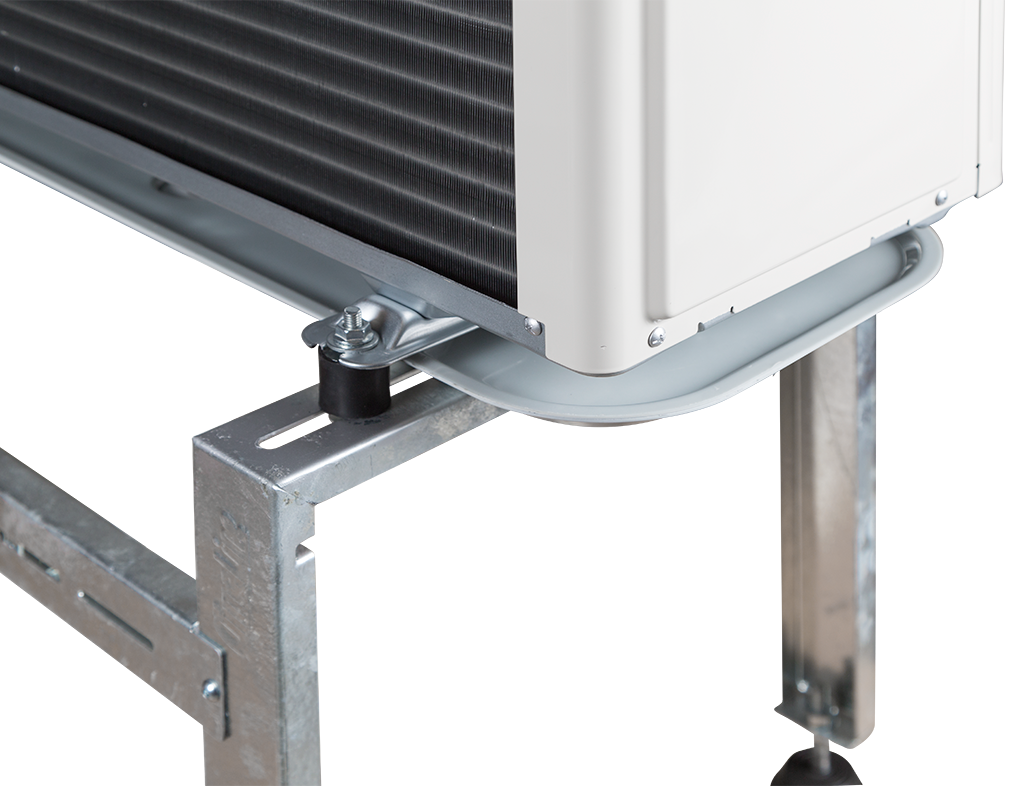
The outdoor part should not hang on the drainage trough, it should be able to move freely
If the trough is stuck, you have forgotten to mount the rubber spacers on the vibration dampers. For outdoor parts with flat feet, they are mounted under the dampers, if the feet have “bowls”, they are mounted on the dampers.
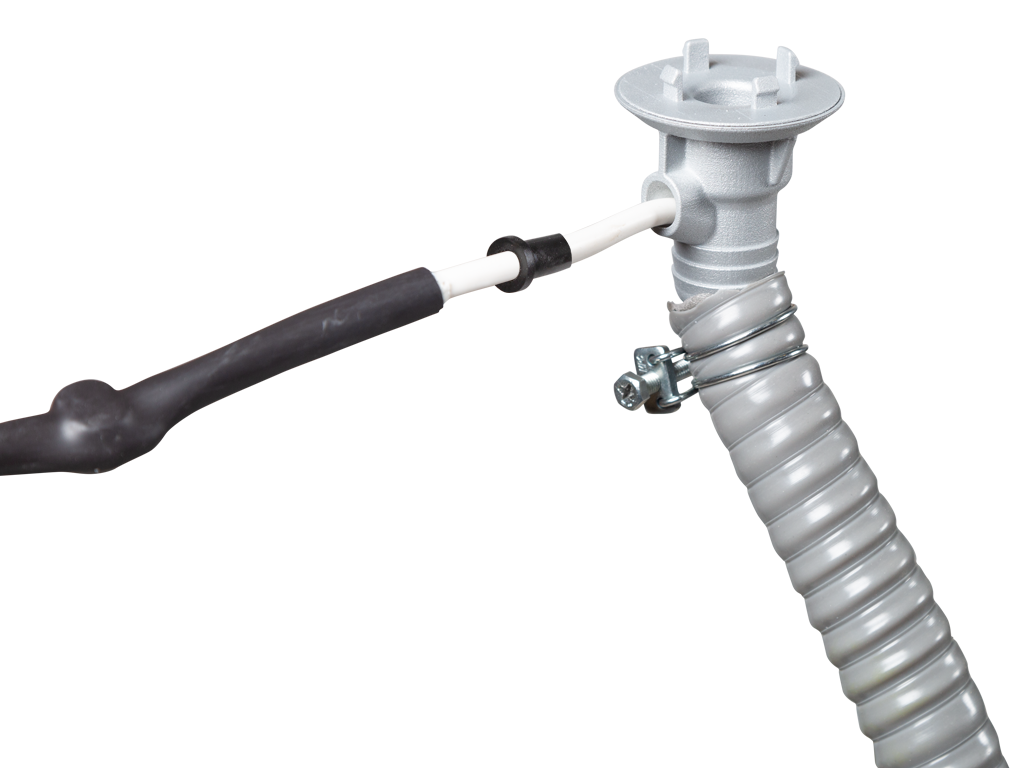
Tighten the trough adapter
The leaf adapter connected to the drainage kit must be mounted with the gasket on the top of the trough and screwed tight (must not be loose).
Where do you direct the water?
Are the house downpipes connected to storm water or to a cistern? – If the answer is yes, Measure the distance between the center of your outdoor unit to the nearest downpipe. Add 60cm of heating cable that is tucked into the downpipe in Götaland, in Svealand 100cm and Norrland 150cm.
Do you have a basement with a floor drain or other drain? Measure the distance from the center of your outdoor unit to a suitable passage to the basement. Perhaps there are already occupied holes, e.g. for ventilation, a wooden window frame, otherwise you have to drill through the outer wall. You only measure to the inside of the basement wall for the heating cable, in the basement you usually use fixed pipes, without heating cable.
The last option is to dig a stone coffin, google “dig a stone coffin”.
Does the heating cable in the drainage kit have to be as long as the hose?
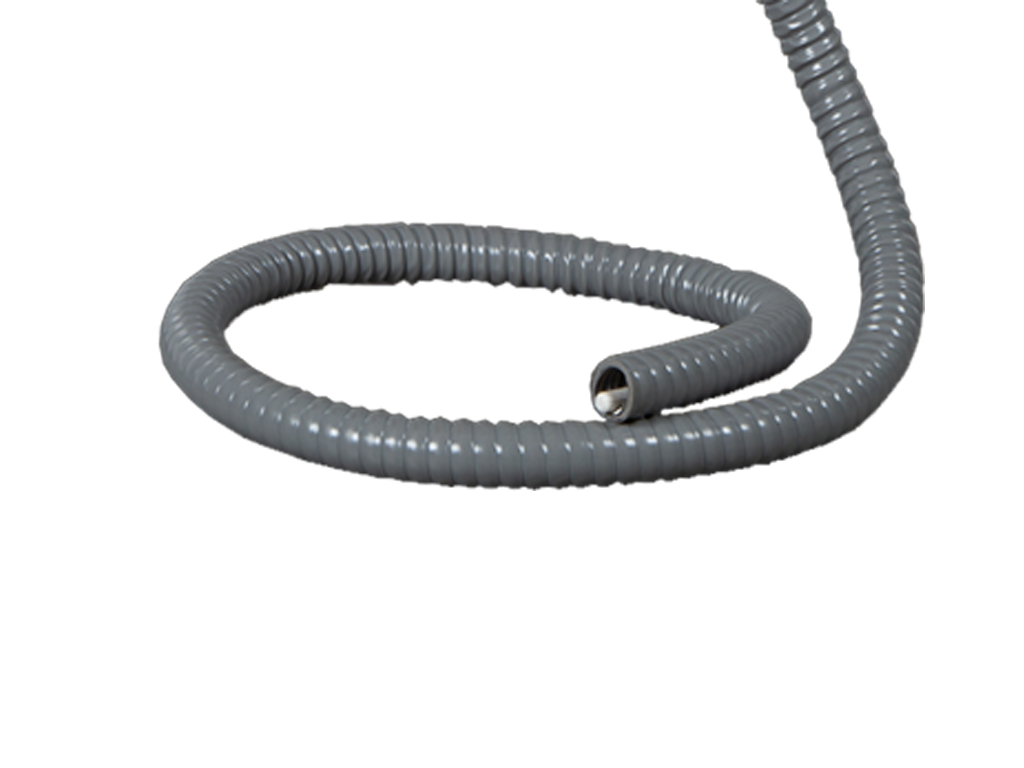
When you have pulled the heating cable through the hose, cut the hose at the end of the cable. It is important that the heating cable heats the entire hose, otherwise you will get an ice plug at the end of the hose, then there will be flooding in the trough.
Tow rope? Can I use something else?
A pull cord/pull spring is a tool used by electricians to pull installation cables easily through pipes. Available in DIY stores, Biltema, Jula, Hornbach, Clas Ohlson. Available from about SEK 50.
You can use a stiffer cable, thicker steel wire or a wire rope, if they are too sharp at the end, tape the end – it won’t stick. Keep in mind that it must be longer than the insulated hose. Then secure the end of the heating cable with good tape – and pull through carefully.